Skip to content

Summarize with
Exterior house paint in Arizona generally lasts between 5 and 10 years, depending on the surface material, paint quality, sun exposure, and maintenance practices. Arizona’s extreme desert heat, powerful ultraviolet radiation, monsoon storms, and dust exposure create harsher conditions than many other regions in the United States. These environmental factors accelerate fading, oxidation, and surface deterioration.
Understanding how Arizona’s climate affects exterior paint helps homeowners avoid premature failure and expensive repairs. A properly maintained paint system protects stucco, wood, and siding materials from moisture intrusion and weather-related damage. Local Painters provides this guide to help property owners understand realistic paint lifespan expectations and ways to extend durability.
Understanding Why Exterior Paint Fails Faster in Arizona
Arizona presents unique environmental conditions that place continuous stress on painted surfaces. Homes experience intense sunlight for much of the year, often with summer temperatures exceeding 110 degrees. Unlike moderate climates, exterior surfaces repeatedly expand and contract due to rapid temperature changes between daytime heat and cooler nighttime conditions.
These conditions weaken paint films over time and create visible wear earlier than manufacturer estimates.
Several environmental factors contribute to paint deterioration:
- Intense UV radiation
- Extreme daytime temperatures
- Monsoon moisture exposure
- Dust and sand abrasion
- Thermal expansion and contraction
Paint manufacturers may advertise products lasting fifteen to twenty years, but desert environments frequently reduce those expectations significantly.
Average Exterior Paint Lifespan by Surface Type
Not every surface ages at the same rate. Material type plays a major role in determining how long paint remains effective.
| Surface Type | Typical Lifespan | Maintenance Requirement |
|---|---|---|
| Stucco | 5–10 Years | Moderate |
| Wood Siding | 3–7 Years | High |
Fiber Cement | 8–12 Years | Low |
| Trim and Fascia | 4–8 Years | Moderate |
| Metal Surfaces | 8–10 Years | Low |
Bonus Tip: South- and west-facing walls often deteriorate faster because they receive direct afternoon sunlight and prolonged UV exposure.
Signs Your Arizona Home Needs Repainting
Paint usually gives warning signs before complete failure occurs. Identifying these issues early helps homeowners avoid expensive stucco repairs or structural damage.
Fading and Color Loss
Strong sunlight gradually breaks down paint pigments. Dark colors generally absorb more heat and often fade faster than lighter desert-inspired shades.
Fading usually becomes visible on areas receiving direct afternoon sun exposure.
Chalking
When paint binders deteriorate, a powdery residue appears on the surface. Running a hand across the wall may leave a chalk-like substance on fingers.
Chalking indicates the protective coating is weakening.
Peeling and Cracking
Peeling often develops when moisture penetrates beneath paint layers or preparation work was incomplete during previous projects.
Hairline cracking can expand quickly if left untreated.
Bubbling
Paint bubbles usually suggest trapped moisture beneath the surface. Arizona monsoon storms may worsen existing weaknesses in exterior coatings.
Common Exterior Paint Problems in Arizona
The desert environment creates several paint-related issues rarely experienced in cooler regions.
Paint Oxidation
Oxidation causes paint to appear dull, faded, and washed out. Homes exposed to prolonged UV radiation commonly develop this problem.
The original color gradually loses depth and vibrancy.
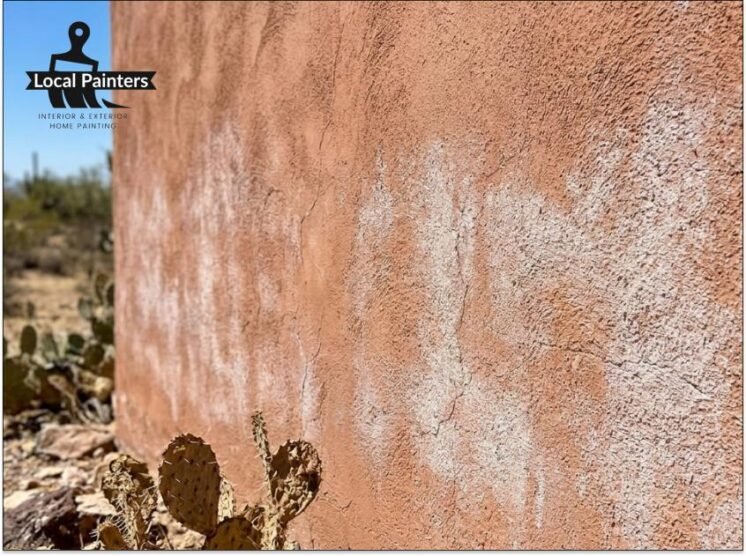
Efflorescence
Efflorescence appears as a white powdery deposit on stucco surfaces. Moisture traveling through masonry materials brings mineral salts to the surface.
Painting directly over untreated efflorescence frequently causes future peeling.
Stucco Cracks
Minor stucco cracking commonly develops because Arizona soil movement and thermal expansion place stress on exterior walls.
If moisture enters these openings, larger repairs may become necessary.
Bonus Tip: Small hairline cracks should be repaired before repainting. Delaying repairs often leads to more extensive stucco damage later.
Ways to Increase Exterior Paint Lifespan in Arizona
While climate conditions cannot be controlled, homeowners can take steps to maximize paint performance.
Use Premium Acrylic Paint
High-quality 100 percent acrylic products maintain flexibility and resist cracking during temperature fluctuations.
Premium paints generally contain stronger resins and UV-resistant pigments.
Choose Lighter Colors
Lighter shades reflect sunlight instead of absorbing heat.
Popular Arizona colors often include:
- Warm beige
- Sand tones
- Light gray
- Desert tan
- Soft cream
Schedule Annual Inspections
Small issues become larger problems when ignored. Homeowners should inspect:
- Cracks around windows
- Faded sections
- Peeling trim
- Bubbling paint
- Stucco separation
Regular inspections reduce long-term maintenance costs.
Best Time to Repaint a House in Arizona
Timing significantly affects paint performance.
Exterior painting projects generally perform best between October and April when temperatures remain more stable.
Painting during extreme summer heat can create issues including:
- Uneven drying
- Roller marks
- Reduced adhesion
- Visible lap lines
Professional crews often begin work early in the morning during hotter months.
Bonus Tip: Surface temperature matters more than air temperature. Walls exposed to direct sunlight may become much hotter than surrounding air.
Things Homeowners Should Consider Before Hiring Painters
Before starting exterior painting projects, homeowners should evaluate several factors.
HOA Restrictions
Many Arizona neighborhoods require approval before color changes occur.
Always review community regulations before selecting paint colors.
Warranty Terms
Not all warranties provide equal protection.
Some only cover materials while others include labor and repairs.
Surface Preparation
Preparation directly affects longevity.
Ensure estimates clearly include:
- pressure washing
- crack repair
- masking
- primer application
- multiple paint coats
Frequently Asked Questions About Exterior Paint in Arizona
Does Arizona weather reduce paint lifespan?
Yes. Extreme heat and UV exposure often shorten expected durability compared with moderate climates.
Is one coat enough?
Most Arizona homes benefit from two coats because they provide stronger protection against sun damage and fading.
What color lasts longest?
Lighter shades generally perform better because they reflect more sunlight and absorb less heat.
Can exterior paint survive monsoon season?
Yes, if surfaces are properly prepared and cracks are repaired before painting begins.
Evaluating Your Home’s Exterior Condition
Exterior paint protects much more than appearance. It acts as a barrier against heat, moisture, dust, and structural deterioration. Homeowners should regularly inspect walls for fading, cracking, and chalking to identify early signs of wear.
Investing in quality materials and proper preparation significantly increases paint performance in Arizona’s harsh climate.
Local Painters Service Information
For homeowners seeking guidance or professional exterior painting assistance, Local Painters provides residential consultations designed specifically for Arizona properties. Understanding local climate challenges helps create long-lasting results.
To discuss project requirements or request an estimate, contact Local Painters via email at localpaintersaz@gmail.com or call 602-775-3019.
Sources
- Angi – Detailed cost breakdowns and national averages for exterior home painting services.
- University of Arizona – Academic research regarding the maintenance of stucco and the impact of Southwest climates on building materials.
- Consumer Reports – Independent testing and buying guides for exterior paint quality and durability.