
Summarize with
Selecting house paint colors in Goodyear requires a balance between personal preference, strict neighborhood regulations, and the extreme Arizona climate. To choose the right color, first obtain a list of approved palettes from your Homeowners Association (HOA) and then identify shades with a high Light Reflectance Value (LRV) to minimize heat absorption. Testing large samples on multiple sides of the house is necessary because the intense Sonoran Desert sun makes colors appear significantly lighter and more washed out than they do on a small swatch.
Local Painters understands the specific environmental demands of the West Valley, where high UV exposure degrades certain pigments faster than others. This guide provides a systematic process for choosing exterior house paint colors that satisfy community standards while protecting the structure from the desert heat. Success depends on understanding how local light, architecture, and neighborhood rules interact to affect the home’s final appearance.
Review homeowner association requirements first
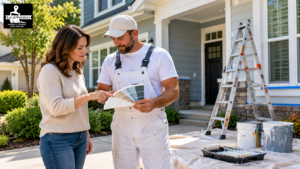
Most residential areas in Goodyear, including communities like Estrella, PebbleCreek, and Palm Valley, are governed by an HOA. These organizations maintain strict control over house paint colors to ensure neighborhood visual harmony. Before looking at any paint chips, consult the community management website or office to request the pre-approved color schemes.
Many HOAs now partner with major paint manufacturers to provide digital libraries of approved combinations. These lists typically specify colors for the main body, trim, and accents like the front door or shutters. Deviating from these lists without prior written approval often results in fines or a requirement to repaint the entire house at the owner’s expense.
Understand the impact of Arizona light on pigment
The quality of light in the desert differs from that in other regions. In Goodyear, the sun is direct and intense for most of the year. This brightness causes house paint colors to appear two or three shades lighter than they do in a showroom or under indoor lighting. A beige that looks medium-toned on a color card might look nearly white when applied to a large stucco wall in July.
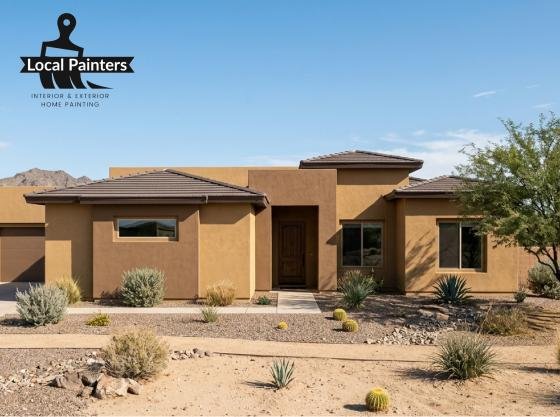
Cool tones like gray or blue can sometimes take on a muddy or washed-out appearance in the desert. Conversely, warm tones like tan, sand, and terracotta tend to look more natural because they complement the surrounding landscape. When choosing exterior house paint colors, look for shades with slightly more depth or saturation than what initially feels comfortable, as the sun will naturally soften the effect.
Bonus Tip: View the color samples outdoors at 10:00 AM and 4:00 PM. These times represent the most common lighting conditions your home will face throughout the day.
Evaluate light reflectance values for energy efficiency
In a city where summer temperatures frequently exceed 110 degrees, LRV is a practical consideration for energy costs and paint longevity, and understanding these factors can also help estimate overall expenses, as detailed in this article on exterior house painting costs.
A report from Sherwin-Williams explains that colors with higher LRVs reflect more thermal energy, keeping the exterior walls cooler. This reduces the heat transfer into the home, which can help lower air conditioning usage. Furthermore, dark colors with low LRVs absorb more UV radiation, which causes the chemical bonds in the paint to break down faster. This leads to premature fading, chalking, and peeling.
Thermal properties of common desert paint shades
| Color Category | Typical LRV Range | Heat Absorption Level | Recommended Usage |
| Off-Whites and Creams | 75 to 90 percent | Very Low | Body and Trim |
| Desert Tans and Sand | 50 to 70 percent | Low to Medium | Body |
| Warm Taupe and Stone | 35 to 50 percent | Medium | Body or Accents |
| Deep Terracotta or Sage | 20 to 35 percent | High | Trim and Doors |
| Dark Browns or Bronze | 5 to 15 percent | Very High | Accents Only |
Coordinate colors with existing home materials
Paint does not exist in a vacuum. The exterior of a home includes fixed elements that do not change, such as the roof tiles, stone veneers, and window frames. Most homes in Goodyear feature concrete tile roofs in shades of red, brown, or gray. The chosen paint must coordinate with these existing tones.
If the roof has orange or red undertones, a paint color with a green or blue undertone might create an unappealing contrast. Instead, look for colors that share a common temperature. For example, a roof with brown tiles pairs well with warm tans or creams. If the home has stone accents, pull a mid-tone color from the stone to use as a trim or accent color to create a cohesive look.
Testing samples in different lighting conditions
Never choose a color based on a one-inch paper swatch. Once the options are narrowed down to two or three possibilities, purchase small sample cans. Apply the paint to large pieces of foam board or directly onto different sides of the house.
The appearance of the paint will change based on the orientation of the wall. A north-facing wall stays in the shade and makes colors look darker and cooler. A south-facing wall receives constant direct light, making the paint look much lighter. Checking these samples over 48 hours allows you to observe how the color shifts from sunrise to sunset.
Factors to consider before making a final decision
Before finalizing a selection for house painting in Goodyear, AZ, consider these practical elements:
- Neighborhood Context: Look at the homes directly next to and across from the property. Avoid choosing the exact same color as a neighbor, but ensure the choice does not clash with the overall streetscape.
- Pigment Type: According to technical data from the Paint Quality Institute, inorganic pigments like iron oxides (earth tones) are more UV-resistant than organic pigments like bright reds or blues. Earth tones will hold their color much longer in the Arizona sun.
- Stucco Texture: Most Goodyear homes have stucco exteriors. Rougher textures create small shadows that can make a color look slightly darker than it would on a smooth surface.
- Maintenance: Very light colors show dirt and rain splashes easily, while very dark colors show salt spray from hard water or bird droppings. Mid-tone tans and grays are generally the most forgiving.
Bonus Tip: Check if the HOA requires a specific paint finish. Most communities mandate a flat or satin finish to prevent glare issues in the bright sun.
Common questions about painting in Goodyear
How often does a home in Goodyear need new paint? Most homes in the Phoenix metropolitan area require repainting every 7 to 10 years. However, south and west-facing walls may show signs of wear sooner due to more intense sun exposure. Using high-quality painting services in Goodyear, AZ ensures the application of thick, protective coatings that extend this timeframe.
Does the paint brand matter for desert homes? Brand quality affects the volume of solids in the paint. Higher solids content results in a thicker dry film, which provides better protection against wind-blown sand and UV degradation. Professional-grade paints from major manufacturers are specifically formulated for regional climates.
Can a dark front door work in Arizona? Yes, but it requires specific care. A dark door facing the sun can reach temperatures high enough to warp the wood or cause the paint to bubble. If the door is protected by a deep porch or overhang, dark colors are safer. If it is exposed, choose a heat-reflective paint technology.
Frequently Asked Questions
Do I need HOA approval for the same color?
Many associations still require a formal application, even if the plan is to use the exact same color currently on the house. This ensures the color still matches the updated community standards. Always verify these details with the HOA board before starting any work.
What is the best time of year to paint in Goodyear?
The ideal windows are spring and fall when temperatures are between 50 and 90 degrees. Painting in the extreme heat of summer can cause the paint to dry too quickly, preventing it from leveling properly and leading to brush marks or poor adhesion. Winter is also acceptable, provided the overnight temperatures stay above freezing.
How do I find house painters near me who understand local rules?
Look for companies that have a physical presence in the West Valley and a history of working within specific Goodyear subdivisions. Local expertise ensures the crew knows how to handle stucco repairs and follows community-specific rules regarding work hours and trailer parking.
Will a darker color make my house hotter?
Yes. According to a study on urban heat published by Arizona State University, dark exterior surfaces can be significantly hotter than light surfaces. This heat is eventually conducted through the walls, increasing the load on the cooling system.
What finish is best for stucco?
Flat or velvet finishes are traditional for stucco because they hide imperfections in the texture. Satin finishes are more durable and easier to wash, making them a popular choice for trim, doors, and high-traffic areas.
Summary of paint selection steps
Choosing the right look for a home involves more than just picking a favorite shade. Start with the HOA guidelines to define the boundaries. Account for the intense Arizona sun by selecting colors that are slightly darker than the desired result and have a high LRV for cooling. Coordinate with the roof and stone to ensure the home looks grounded in its environment. Finally, test large samples in real-world light to avoid surprises. Following these steps helps maintain property value and ensures the finish lasts for years.
Local Painters recommends evaluating these factors carefully to avoid the cost of repainting due to HOA violations or dissatisfaction with how the color reacts to the desert light.
Professional painting services
Maintaining a home in the desert requires attention to detail and high-quality materials. For residents looking for expert assistance, Local Painters provides comprehensive solutions for residential properties. Whether the project involves a complete color change or a routine refresh, the team focuses on durable results that stand up to the Arizona sun. To discuss a project or request more information about house painting in Goodyear, AZ, contact the office at 602-775-3019 or via email at localpaintersaz@gmail.com.
Sources
- Sherwin-Williams – Technical information on Light Reflectance Value and its impact on thermal performance.
- The Weather Channel – Climate data for Goodyear, Arizona, showing average high temperatures and sun exposure.
- Paint Quality Institute – Educational resource for pigment durability and the differences between organic and inorganic paint components.
- Arizona State University – Research regarding the relationship between surface color and heat retention in desert environments.