Skip to content

Summarize with
In the harsh desert climate of Arizona, most residential exteriors require repainting every 5 to 7 years. The combination of intense ultraviolet radiation and extreme temperature swings causes paint binders to break down much faster than in other regions of the country. Homeowners with wood siding may need to address their property every 3 to 5 years, while those with well-maintained stucco can often wait until the 6- or 7-year mark. If you’re planning a repaint, it’s important to understand the cost to paint a house before starting your project.
Properly timing this maintenance task prevents structural damage and maintains the value of the property. Waiting too long allows the Arizona sun to strip away the protective layer entirely, leading to cracked stucco or rotted wood that costs significantly more to repair than a standard paint job. This guide provides an expert look at the variables that dictate how long exterior paint lasts in Arizona and how to identify when to repaint house exterior surfaces before costly damage occurs.
Average Lifespan of Exterior Paint in Arizona
The question of how often you should paint your house exterior depends heavily on the specific environmental stressors of the Southwest. While paint manufacturers often claim their products last 15 years or more, these estimates rarely account for the relentless desert sun. A report from the Arizona State University Urban Climate Research Center highlights that surface temperatures on buildings can exceed 160 degrees Fahrenheit during the summer months. This level of heat causes standard paint to lose its elasticity and bond.
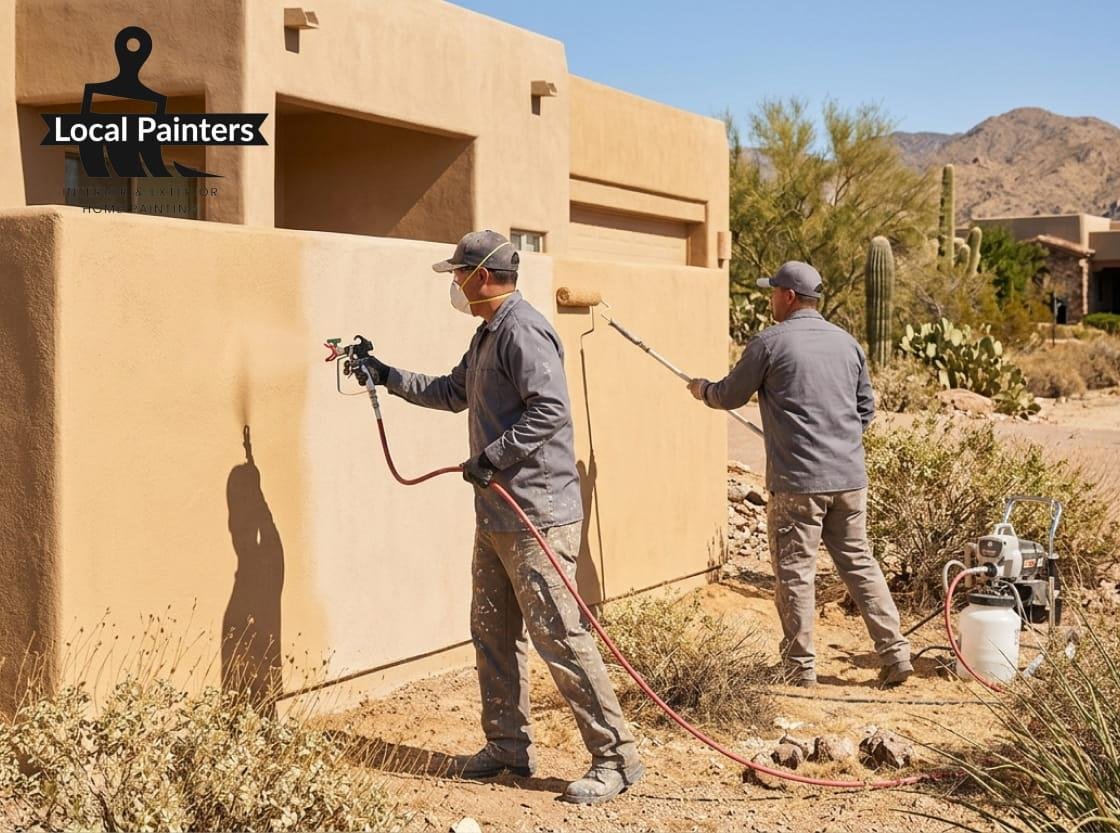
Different exterior materials respond differently to Arizona’s extreme heat and weather conditions. Stucco, the most common surface in the region, is highly porous and requires a durable, high-quality coating to prevent moisture damage during the monsoon season. Wood trim and fascia boards are especially vulnerable, often showing early signs of cracking, peeling, or fading before the main walls. To protect these surfaces and extend the life of your paint, many homeowners rely on professional house painting services for long-lasting, weather-resistant results.
Material-Based Painting Intervals
| Material Type | Estimated Lifespan in Arizona | Primary Cause of Failure |
|---|---|---|
| Stucco | 5 to 7 Years | UV degradation and hairline cracks |
| Wood Siding | 3 to 5 Years | Drying, warping, and peeling |
| Fiber Cement (Hardie Board) | 7 to 10 Years | Fading and moisture absorption at seams |
| Brick or Masonry | 8 to 12 Years | Efflorescence and mortar wear |
| Metal Gutters and Trim | 5 to 8 Years | Heat expansion and chalking |
Signs of Arizona Sun Damage on House Paint
Identifying when a home requires a new coat involves more than just looking for peeling sections. In a desert climate, the degradation process often starts with subtle changes in the texture and appearance of the finish.
Exterior paint fading in Arizona heat is usually the first visible sign. High-energy UV rays break down the chemical bonds of the pigments, causing colors to lose their vibrancy. Darker colors like deep browns, reds, or blues absorb more heat and typically fade much faster than lighter shades like beige, tan, or off-white.
Another common issue is chalking. If you run your hand across the surface of the wall and a chalky white powder transfers to your skin, the paint resin has failed. This powder indicates that the paint can no longer protect the underlying material from moisture. According to data from Sherwin-Williams, chalking is a natural result of weather exposure, but it becomes a major problem when it prevents new paint from adhering during future applications.
Impact of Orientation on Paint Durability
The direction your home faces plays a massive role in determining the repaint house desert climate schedule. The south- and west-facing walls of a structure receive the most direct sunlight throughout the day. These “hot walls” often experience paint failure two or three years before the north-facing walls, which stay mostly in the shade.
Homeowners should inspect their south and west walls annually for cracking or thinning. If these areas look significantly worse than the rest of the house, it may be time to call professional exterior house painters to discuss a refresh. Proactive maintenance on these specific areas can sometimes extend the life of the entire paint job.
Bonus Tip: When choosing colors for south-facing walls, select shades with a high Light Reflectance Value (LRV). Paints with an LRV above 50 reflect more light and heat, which helps the coating stay cooler and last longer.
How Often to Paint a Stucco House in Arizona
Stucco is a durable material, but it is not indestructible. It is a cement-based product that expands and contracts as temperatures change. In Arizona, where daytime and nighttime temperatures can differ by 40 degrees, stucco is under constant stress. Small hairline cracks are common, but they must be sealed with paint to prevent water from reaching the interior framing.
For most stucco homes, a 6-year cycle is ideal. This interval ensures that the paint film remains thick enough to bridge small gaps and maintain a waterproof seal. Local Painters suggests that waiting longer than 7 years often results in the stucco becoming “thirsty,” where it absorbs the moisture from the new paint too quickly during application, leading to a poor bond.
Things to Consider Before Making a Decision
Before scheduling a project, several factors should be evaluated to ensure the best results.
- Quality of Previous Paint: If the previous owners used a cheap, contractor-grade paint, the lifespan will be significantly shorter than a home treated with a premium 100% acrylic latex product.
- Surface Preparation: Paint only lasts as long as the surface it is bonded to. Houses that were not properly power-washed or scraped before the last paint job will likely see premature peeling.
- Monsoon Damage: High winds and blowing sand during Arizona storms act like sandpaper, physically wearing down the paint layer over time.
- Irrigation Overspray: If sprinklers constantly hit the side of the house, the minerals in the water will create hard deposits and cause the paint to bubble or peel within just a few years.
Best Time to Paint a House in Arizona
Timing is everything when it comes to exterior painting in the desert. The best time to paint a house in Arizona is during the spring (March to May) or the fall (October to November). During these windows, temperatures typically stay between 60 and 90 degrees Fahrenheit, which is the ideal range for paint to dry and cure correctly.
Painting in the dead of summer is risky. If the surface of the wall is too hot, the paint will dry almost instantly upon contact, preventing it from soaking into the substrate. This leads to a thin, brittle layer that will flake off within a year. Conversely, winter nights can sometimes drop below freezing, which can ruin the chemical curing process of water-based paints.
Bonus Tip: Always check the weather forecast for wind. Arizona spring winds can carry dust and debris that will stick to wet paint, ruining the finish and requiring a complete redo of the affected sections.
Common Questions About Desert Painting
Many residents wonder if they can simply touch up faded spots rather than repainting the entire house. While touch-ups work for small scratches, they rarely blend well on a sun-faded wall. The new paint will likely look much darker and glossier than the surrounding area, creating a patchy appearance.
Another frequent inquiry involves the use of elastomeric coatings. These are thick, rubber-like paints designed to bridge larger cracks in stucco. While they provide excellent waterproofing, they are less breathable than standard acrylic paints. A study by Consumer Reports suggests that while specialty coatings have their place, a high-quality 100% acrylic latex paint remains the most versatile choice for most residential exteriors due to its balance of durability and breathability.
Frequently Asked Questions
Does the Arizona sun affect all paint colors equally?
No, darker colors absorb more UV radiation and thermal energy, which causes the chemical bonds in the pigment to break down faster. Lighter colors like sand, cream, and light gray reflect more energy and typically retain their appearance for 2 to 3 years longer than dark browns or blues.
Can I paint my house myself during the Arizona summer?
It is not recommended. Professional equipment and specific techniques are required to manage the fast-drying times in the heat. Local Painters often use additives to slow down the drying process, but even then, painting when surface temperatures exceed 100 degrees usually results in a failed finish.
How do I know if my stucco is damaged or just needs paint?
If you see large cracks wider than a credit card or chunks of stucco falling away, you likely need professional stucco repair before painting. If you only see thin hairline cracks and a chalky surface, a standard repainting process will usually suffice to restore the home.
Is one coat of paint enough for an Arizona home?
One coat is rarely sufficient for a long-lasting result in the desert. Two coats provide the necessary thickness to resist UV rays and mechanical wear. The first coat often acts as a primer or sealer, while the second coat provides the finished color and protective barrier.
Final Considerations for Maintaining Exterior Paint
Maintaining a home in Arizona requires a proactive approach to combat the effects of high heat and sun exposure. By adhering to a 5- to 7-year repainting schedule, homeowners can protect their investment and avoid the high costs associated with stucco and wood repair. Regular inspections of south- and west-facing walls will provide the best indication of when the current coating is reaching the end of its functional life.
Choosing the right time of year and using high-quality materials are the most effective ways to maximize the duration of a paint job. While the desert is tough on buildings, modern paint technology provides the tools necessary to keep a home looking new and remaining structurally sound for years.
Professional Painting Services in Arizona
Maintaining the exterior of a desert home requires specialized knowledge of local weather patterns and material needs. For those looking for expert assistance with their next project, Local Painters provides comprehensive exterior solutions tailored to the Arizona climate. The team focuses on thorough preparation and the use of premium materials to ensure a durable finish. To schedule a consultation or request an estimate, contact Local Painters at 602-775-3019 or via email at localpaintersaz@gmail.com.
Sources
- Arizona State University Urban Climate Research Center – Research and data regarding urban heat islands and surface temperatures in Arizona.
- Sherwin-Williams – Technical guides on paint failure, chalking, and environmental impacts on coatings.
- Consumer Reports – Independent testing and guides on the durability and performance of various exterior paint types.
- National Renewable Energy Laboratory – Data on solar radiation levels that contribute to paint degradation in the Southwest.