Skip to content

Summarize with
For a standard residential property in 2026, the exterior painting cost Arizona homeowners should expect typically ranges from $3,500 to $7,500. This estimate applies to the average single or two-story home between 1,500 and 2,500 square feet. On a square footage basis, rates for house painting services in Arizona generally fall between $1.80 and $4.10 per square foot, depending on the condition of the stucco or siding and the quality of the paint selected.
This price guide provides a detailed look at the current market rates for exterior painting across the state. The data reflects recent shifts in labor availability and material costs specific to the desert Southwest. Local Painters brings years of professional experience in the Phoenix and Tucson markets to explain exactly how these costs are calculated and what factors will move a quote up or down.
Average Cost of House Painting Estimates by Home Size
The size of a home is the most significant factor in the painting contractors’ pricing that Arizona residents receive. Larger homes require more gallons of paint and more hours of labor for masking, spraying, and back-rolling. The following table provides a general house painting cost breakdown based on total livable square footage, which is the standard metric used by most professionals in the state.
2026 Arizona Exterior Painting Cost Estimates
| Home Size (Square Feet) | Typical Price Range | Average Duration |
| 1,000 – 1,500 | $2,700 – $4,500 | 2 – 3 Days |
| 1,501 – 2,000 | $3,600 – $6,000 | 3 – 4 Days |
| 2,001 – 2,500 | $4,500 – $7,500 | 4 – 5 Days |
| 2,501 – 3,500 | $6,300 – $10,500 | 5 – 7 Days |
| 3,501+ | $10,500+ | 7+ Days |
These figures include basic preparation, two coats of mid-to-high grade paint, and minor stucco repair. Property owners with extensive wood trim, multiple colors, or significant damage should expect quotes toward the higher end of these ranges.
Primary Factors Influencing Exterior Painting Estimates in Arizona
Several specific variables change the final price of an exterior painting project. Understanding these helps homeowners compare quotes accurately.
Surface Condition and Prep Work
Arizona’s intense heat causes stucco to crack and wood to dry out quickly. If a home has significant “spiderweb” cracking or large chunks of falling stucco, the prep work phase will take longer. According to data provided by Angi, prep work can account for up to 25 percent of the total project cost. This includes power washing, scraping old paint, caulking windows, and patching masonry.
Quality of Materials
The type of paint chosen impacts the exterior painting price per square foot significantly. In the Arizona sun, cheap paint will fade and chalk within three years. High-quality paints with UV inhibitors are more expensive per gallon but last much longer. For instance, Sherwin-Williams offers various product tiers, and opting for a premium line can add $500 to $1,200 to the total cost but may double the lifespan of the job.
Bonus Tip: Look for paints specifically formulated for high UV exposure. These products often have better color retention for darker desert tones like browns and tans.
Accessibility and Height
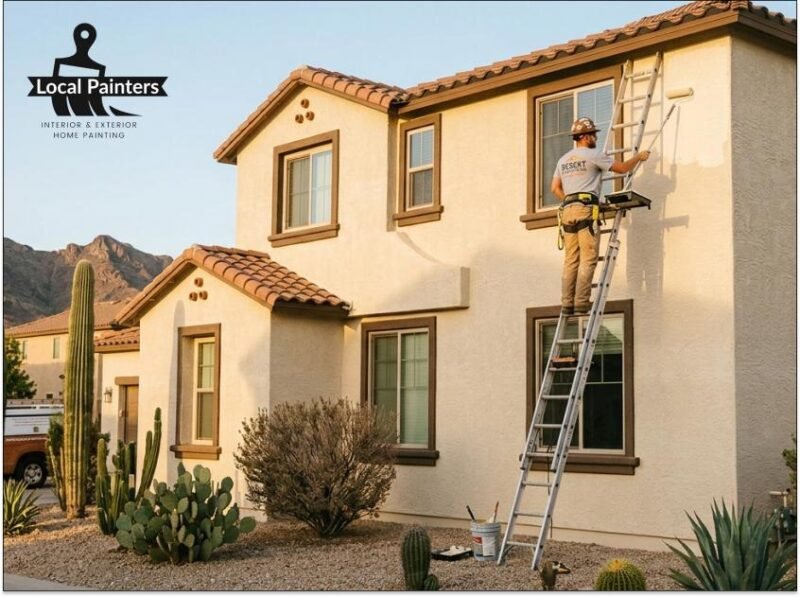
Two-story homes cost more than single-story homes, even if the square footage is the same. Painters must use tall ladders, scaffolding, or lifts, which increases the time spent on the job and raises insurance requirements. If a house is built on a steep slope or has difficult landscaping that limits ladder placement, labor costs will rise accordingly.
Labor Trends and Regional Differences in Arizona
Labor is the largest portion of any exterior painting estimate. In 2026, labor rates vary slightly depending on the city. Data from the U.S. Bureau of Labor Statistics indicates that skilled trade wages in the Phoenix-Mesa-Scottsdale area are slightly higher than those in more rural parts of the state.
In metropolitan areas like Scottsdale or Paradise Valley, homeowners may see a 15 to 20 percent premium on quotes from Arizona painting contractors due to higher business operating costs and stricter HOA requirements. Conversely, in cities like Yuma or Sierra Vista, prices might be 10 percent lower than the state average.
Material Costs and Inflation
The price of paint and supplies has remained sensitive to global supply chains. In 2026, a gallon of professional-grade exterior paint typically costs between $45 and $95. When you add the cost of plastic sheeting, painter’s tape, rollers, and spray tips, the material portion of a house painting cost breakdown usually sits at 15 to 30 percent of the total bill.
Things to Consider Before Making a Decision
Before signing a contract for house painting services, Arizona residents should evaluate several practical aspects of the project.
- HOA Approval: Most Arizona neighborhoods have strict Homeowners Association rules regarding color palettes. Getting approval can take weeks, and using an unapproved color can result in heavy fines or the requirement to repaint the entire house.
- Timing and Weather: Painting in the middle of a July heatwave is not ideal. Paint can dry too quickly, preventing it from bonding correctly to the surface. Spring and fall are the busiest seasons for painters in Arizona, and prices may be higher during these peak times.
- Warranty Length: A reputable contractor should offer a warranty on labor, typically ranging from two to five years. Material warranties are provided by the manufacturer and can last much longer.
- Lead Paint Testing: For homes built before 1978, federal law requires specific testing and handling procedures for lead-based paint. This adds to the safety requirements and total cost.
Bonus Tip: Ask for a detailed written scope of work. A quote that simply says “Paint House” is a red flag. It should specify the brand of paint, the number of coats, and the specific areas included, such as the garage door, eaves, and pop-outs (architectural trim accents).
Common Questions Homeowners Ask
When researching how much it costs to paint house exterior surfaces, many people focus solely on the bottom line. However, the method of application also matters.
Is spraying better than rolling?
In Arizona, most stucco homes are painted using a “spray and back-roll” method. The sprayer applies the paint quickly, and a second person follows with a roller to push the paint into the deep texture of the stucco. This provides the best coverage and durability.
Does color affect the price?
Very dark or bright colors can increase the price. These colors often require more coats to achieve full coverage and may need a tinted primer. Additionally, dark colors absorb more heat, which can lead to faster surface degradation over time.
How often should an Arizona home be repainted?
Due to the intense UV radiation, most homes in the desert need a fresh coat every 7 to 10 years. Homes with wood siding or those in high-wind areas with blowing sand may need attention every 5 to 7 years.
Practical Advice for Evaluating Quotes
When you receive an exterior painting estimate that Arizona contractors provide, look past the total number. Check if the contractor is licensed, bonded, and insured. In Arizona, the Registrar of Contractors allows you to verify a license online. Hiring an unlicensed individual might save money initially, but it leaves the homeowner liable for injuries and offers no recourse for poor workmanship.
Compare the specific materials listed. One contractor might be cheaper because they are using a “contractor grade” paint that will only last four years, while another is using a “premium grade” that lasts ten. Over time, the more expensive quote is often the better value.
Answers to Frequent Concerns
How long does the average project take?
A standard 2,000 square foot home usually takes three to five days. The first day is for pressure washing and drying. The second day involves masking and prep. The final days are for the actual painting and cleanup.
Should I buy the paint myself?
It is usually not helpful to buy the paint yourself. Professional painters get significant discounts at major paint stores that are not available to the public. They also know exactly how much material is needed, preventing the waste of buying too much or the delay of buying too little.
Does the estimate include the trim and doors?
Standard quotes typically include the main body of the house, the eaves (fascia), and the trim around windows and doors. However, some items, like the garage door or the front door, might be listed as optional add-ons. Always clarify this before the work begins.
Can I paint my house in the summer?
Yes, but it requires an earlier start. Professionals usually begin at dawn and stop by noon or 1:00 PM when temperatures peak. This ensures the paint has enough time to set before the surface becomes too hot for the product to adhere correctly.
Summary of Key Takeaways
The exterior painting cost Arizona residents pay is a reflection of the home’s size, the amount of repair work needed, and the quality of the materials used. Budgeting between $1.80 and $4.10 per square foot is a reliable starting point for 2026. Prioritizing prep work and high-quality UV-resistant paint will ensure the investment lasts through the harsh desert summers. Always verify licenses and HOA requirements before starting any work to avoid unexpected costs or legal issues.
Direct Professional Guidance
For those seeking more specific information or a personalized quote, Local Painters provides detailed assessments for residential properties across the state. Accurate pricing requires a physical or virtual walkthrough to account for the unique condition of each home. To discuss a project or schedule a consultation, contact the team at 602-775-3019 or via email at localpaintersaz@gmail.com for expert assistance with your painting needs.
Sources
- Angi – A leading home services marketplace that tracks national and regional averages for home improvement costs and labor.
- Sherwin-Williams – A major global paint manufacturer providing technical data on paint grades, coverage rates, and UV resistance properties.
- U.S. Bureau of Labor Statistics – A federal agency that provides official data on wages, labor trends, and inflation for specific regions and industries.
- Arizona Registrar of Contractors – The state regulatory body that oversees the licensing and conduct of construction professionals in Arizona.